Friday, June 12, 2015

OTOA Conference pt. II

This is part II of the adventures of the OTOA 2015 Conference.

Day three - should I be doing this?

I had the jitters about this class and I'll explain why, I haven't done much work with a carbine since getting out of the military 20 years ago. Sure, I've shot them at the range but running and gunning. NO! So basically I've slid down to the GED education level of gun manipulation and well, I was taking a doctorate level class from a world class instructor.

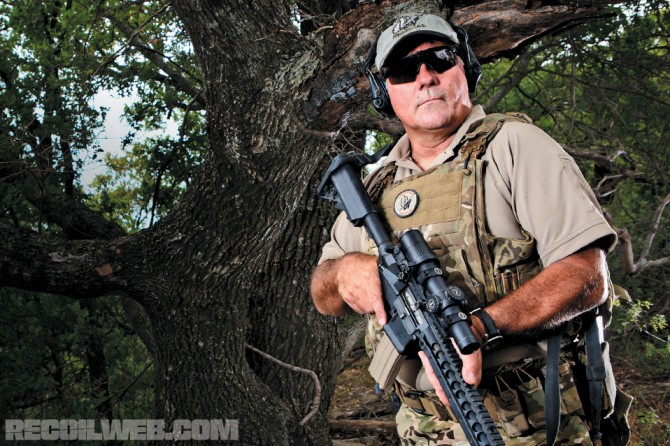
Let's start by introducing the instructor Mike Pannone, USMC Force Recon and Delta operator. Here is Mike's bio from his web page. He is no joke, and the work he has done to become an instructor is second to NONE! Even after his injury, he can still knock the wings off a fly a 50M. He has a daunting presence about him, but don't let that fool you, he loves to teach, he loves to pass on knowledge and does an amazing job at it.

The class started as all should, a brief talk, and when I say brief, I mean it. The bio of his web page took longer to read than he spent speaking of himself. He instead used it to explain his teaching methodology and why were were about to learn what we did. We then we zero'd our rifles then moved into target acquisition and sped up from there.

This wasn't, I'm sure a high speed class, we took our time, shot when needed and we discussed flaws that needed to be fixed. Instead of just putting rounds down range we were taught why we put them down there, why the body reacts to certain movements and then we adjusted. Simply put, when someone this good grabs the rifle and demonstrates what you should be doing, everyone pays attention and everyone adjusts. Mr. Pannone means to take you out of your comfort zone and force you to take the advice and to a man, each one of us noticed marked improvements. The majority of those taking the class were veteran SWAT officers, very few had the experience level I had.

Everyone can put 5 shots in a 4" square while walking to a target in 10 yards, but can you do it while reloading? By the end of the drill, we all were doing it, quite flawlessly too. I'm not sure if it was simply because we wanted to prove we could all do it, but I am sure we all had the proper techniques and guidance which lightened the motor skill learning curve.

After lunch we did a few more drills and then moved into the meat and potatoes of the class. Probably the most beneficial for me. We did malfunction drills. So, maybe you just asked why that would be so beneficial, weapon manipulation and familiarization is now at a whole new level. Not to mention, I can clear just about any malfunction in a few seconds.


We teamed up and practiced jamming guns for our partner. Mike's method of clearing isn't rocket science, it's tap, rack, bang but on steroids. I'm sure you can Youtube him doing his system and too boot he does it blindfolded. After several drills he then had us lay three sets of 5 guns out and we all cleared 5 jams and shot at target (50M) until each one of us were feeling just cocky enough to watch a master do it blindfolded in about 4 seconds per rifle. Fun stuff.

The day ended with 100M shots. By the end of a hot day, this was easy. Right up until the guy next to you bury's his shell casings down your shirt! That asisde, my grouping went from about 6" at the start of the day to just under 3". Not that I'm a master marksman, but after the teachings and day we had, my comfort level with the rifle was never better, my patience never greater and my guide on my journey, I couldn't have picked a better one if I tried. Well done Mr. Pannone - Thank you!

Take away of the day - if you have time to set up, line up your sights and take the shot you want, it isn't a gun fight, it's a shooting. (I paraphrase this but it doesn't take away from the sentiment- that's truth).


Day Four - Drawing from a holster.

The prior day, I was out of my comfort zone and worried. When I woke up this day, none of that was there. I'm good with my pistol, it's what I shoot! In fact I shoot it a bunch. We soon found out that this class would further tell us, what we thought we knew, we didn't....

Let me introduce you to Matt Jacques of Victory First and his class, fighting from concealment. We got the news upfront, this was a 3 day course that he compacted into nine hours. Welcome to an eye opening statement. For the next nine hours we would be on the trigger, drawing from the holster and refining a skill that almost everyone stated they didn't get enough of...ever! Drawing your gun. By days end, that was not going to be spoken again, to the tune of almost 300 times, we learned to draw correctly.

We lined up and started with accuracy drills but slowly and methodically. Drawing each time. This wasn't about speed! We were being ever so slightly indoctrinated into his styles, his system.

From that point on 2/3rd 1/3rd was going to be ingrained into us. Speed happened in the 1st 2/3rd of the draw and the final 1/3rd was putting a proper and accurate shot on target. It was then we heard and knew...A gun fight lasts the rest of your life.

It felt like we did a lot of drills, but in reality we didn't do that many but we did do them properly. Accuracy was improving and then...the steel targets came out. We were no longer looking to put the hole in paper on a line or in a circle. We were going to put it on a steel figure from a much further distance. Because you never knew where a gun fight would happen only that you had the rest of your life to do it!

By lunch time I was feeling good about myself. We've been timed, we worked thru clothes hang ups and put many rounds down range. Then Mr. Jacques taps you on the shoulder and tells you - put one on target, one on each target, two on each target - oh and the class is watching you while I time you and write this down. Without really saying so, he just amped up the stress and put 30 sets of eyes on you. Suddenly, things didn't go as smoothly as they once did. You, just, work, thru, it.

After lunch we worked malfunctions, reloads and smoothing out the draw. We touched on one handed shoots and shooting while holding something. Then came the spot we all wanted to be in. Shooting from cover/concealment from about 30 yards. The targets seems smaller all of a sudden. Technique is the key to this series of drills, but now you are tired, hot and dare I say, over confident in your shooting. No doubt, this is a great towards the end of the day drill.

The drills conclude with a duplicate of the cover/concealment drill only this time, you are racing against the shooters next to you, you shoot, move and shoot until you get tapped out or you win. Simple! Until you start to miss or become tired.

At the end, you have a brief discussion and question period. The eye opening thing is how many got the same bit of good out of the class as I, myself did. Repetitive drawing is something more of us should do and by the show at the end of the class, everyone is on that same page.

Because, you only have the rest of your life in a gun fight.


Wrap it up
Sorry for the length of this blog post. It's been fun writing these and recalling all the tid bits of info I've already filed away. All in all, the OTOA is a top notch organization and their philosophy on training is second to none...everyone should have the training they need.

So to my class mates, instructors and fellow 1st responder, thanks - for not only getting proper training but caring enough about the citizens you serve to get better. To the OTOA people in charge, well done. I wish all organizations would care this much on getting all 1st responders trained to this high level.


To learn more on Mike Pannone classes and here. Facebook page.
To learn more on Matt Jacques classes. Facebook page.


Thursday, June 11, 2015

OTOA 2015 Conference

This is part I of II of the 2015 Ohio Tactical Officers Association (OTOA) Conference.

Let me start by saying, I'm going to try and be as brief as I can with this blog post. That will not be an easy task. Ohio did/does an amazing job of bringing in as many people in as they can. As long as you want to learn and should be there, it's a go. None of this, SWAT officers ONLY business that so many of these other shows want to try. That is why OTOA had close to 1000 people at the conference. It was a HUGE success. The banquet stated there were people from 14 states and 2 countries. Nicely done OTOA!

Held at Kalahari Resort in Sandusky Ohio, as soon as you make entrance into the place you know it's going to be a big conference. 

Day one TEMS class. 

This is why I attended the show. It featured the TEMS class. A "break-out" as they call it. We arrived after registration at a off site location. The class started a 8 AM sharp and featured about 15 minutes of safety talk and then went right into a brief lecture. The lecture offered all the new and important happenings in TEMS/TCCC. Nothing ground breaking, but just re-affirmation on what we need to do and the changes that Co-TECC has implemented as of late.

They then broke us off into our stations, the day featured 6 different stations. Some creativity and informational stations lead to not being overwhelmed physically for 40 minutes out of every hour for the rest of the day. Each station had a round table debrief and discussion. Solid information all around. 

#1 Moving Vehicle - Featured treating a live patient while in a moving car/back of a pick-up. We got the scenario and were told where the treat was, the rest was up to us as a team (two man). We waved the police cruiser in and moved the victim in the back while we worked on him. Seems simple, but while the car was swaying, turning and accelerating, it added a new dimension to it. Part two was equally as difficult as we had to load the patient into pick-up truck and tube/TQ/IV while moving as mentioned earlier. All in all, moving in a fast moving vehicle is much different than moving in an ambulance.  

#2 Active shooter - This was a school shooting. We get a scenario and are told to move out as a team with a SWAT team. Upon making 1st contact, shots go off and we have to split the team as the call goes out that others are down. The 2nd victim has a cut suit on. We have to surgically cric this victim while the officers with us are actively engaged in shooting at the perp. The added stress and splitting off from the team definitely makes you think. Cutting into a human (or that close to him) scares you no matter if it's a suit or not. Live actors lead to the drama and havoc of this type of situation.  

#3 A/C joint/Shoulder issues - A bit of a lull after 2 solid fast moving sessions. But I got to say, as EMS providers, we don't get as much rehab info as we need. This was a great session taught by two very educated TEMS medics. 

#4 Training - Maybe the best session of the day. Why? We got to met a VERY creative and budget constrained Medical Control doctor. He wanted his guys to train like they played. He had a great imagination and you could tell he loved his job. His training consisted of a slab of ribs over a Styrofoam (pictured) torso with balloons to mimic needle decompression. A remote controlled fish tank pump that sent blood flying in the air at the push of a button and many other home made props that lead to some impressive training. 

#5 Mass Casualty - The one station that dropped the ball. The communication and scenario were given, we have live role players all day, and the lead proctor seemed to be more interested in telling us not to touch the role players rather than letting us know we had people inside and would have an escort of SWAT. Inside, the scene was made chaotic and hectic by screams, blasts and general poor lighting. Every room we moved too had a person down. We moved the casualties out as fast as we could. Never did we get the call to inform us of an Officer down nor were we told the people standing by the triage area were "not supposed to be there" which lead to us getting a firm talking to about abandoning our patients, etc...Lastly, the officer down didn't get the attention a scene like this would have genuinely had, why? We didn't know he was an officer. Leading to some stern discussion by our team vs. the overly concerned proctor who didn't really do his job conveying the scenario. 

#6 Meth lab - A very well set up and acted scenario. By this time, seven hours into the day, we were tired and mentally drained from the day. This set up made us pay attention. It featured a blown up meth lab with kids inside (we didn't know about the kids prior to entry) and a mom and dad more worried about bickering than helping. Well done done controlled chaos and well, lets just say trying to tube a 4 year old while mom keeps kicking you, adds to the increased stress level 

Overall, the TEMS "breakout" was a solid day of reality based training. I wish I had more pictures to show. We had a brief - debrief at the end of the day that really only consisted of applause for the actors and certs being handed out because each evolution offered great discussion. The OTOA tactical doctors, medic providers and med control did a great job with this session.

Day two - in-conference, conference. 

This day was "vendor day" but featured so MUCH more. There were over 150 vendors in attendance and a LOT to see and do. The OTOA staff did an amazing job of having you visit each booth by giving away cards that were to be turned in at the end of the night, if your card was completely filled out you won a door prize. 

Luckily, I was able to meet, collaborate and rub elbows with those I wanted too. North American Rescue, Eleven 10, Combat Swag, Tactical Medical Solutions, 5.11 and maybe my favorite company Tru-Spec. All of these people were unbelievably approachable and friendly. I really enjoyed dealing with each of these companies. I even got invited to tour the facilities of a several of them. 

Along with the vendor showcase, every hour on the hour a new smaller break out was set up. Dealing with topics that included , long range shots, SABA, TQ usage, ballistics, leadership topics...etc. My favorite of the day was meeting and listening to Jim Smith (former Delta operator and veteran of "Black Hawk Down"). He spoke on preparedness for the 21st century in an ever evolving and challenging profession.  Great guy with a great story and message. Worth going for this day alone. More on Mr. Smith can be found here on his website

The day ended with the door prize give away but that was not all, we also had a vendor picnic and got to shoot a variety of weapons provided by the vendors including less lethal munitions. And let me say, they did NOT skimp on what they brought out to shoot. 

Overall, two great days of conference gold. OTOA does a great job. But, this is not complete yet. I have two more days to go. Please check out part II coming tomorrow, which features CTT Solutions and Victory 1st both full day firearm classes held by top notch instructors Until then...


Wednesday, April 1, 2015

Coming SOON - Product Review!

US Tactical Emergency Medicine is taking on a new project-

We wanted to provide others some insight to the gear I've dealt with. So over the next few months, when time permits, I'm going to provide details, specs, likes/dislikes and summary of gear that.

Why would I want to get into this arena? Simply because there are those that are always looking for honest, simple and respectful, non-paid, feedback on gear we use and have availability too. I'm not going to lie, sometimes companies give me samples, and I will talk about that, but that won't change my methodology for the review and who know, might even help them improve.


So please, give us your ideals and thoughts. Tell us what you want to see and we will do our best to get that feedback too you.

In the works-
Tru-spec Combat shirt
VooDoo Tactical Special Operators Bag
5.11 24 Hour Rush Bag
Oakley Radar Glasses

WWW.USTEMS.COM

Warrior Wedensday 04-01

Doolittle's Raiders - Today's Warrior Wedensday, flashback. Honoring Lt. Col. Hite who passed away earlier this week.

Colonel Hite's story (here)

 Graduated from High School in 1937; Completed three years of college and enlisted as an Aviation Cadet on September 9, 1940 at Lubbock, Texas. Commissioned as Second Lieutenant and rated as pilot on May 29, 1941. Was captured after Tokyo Raid and imprisoned by the Japanese for forty months. Liberated by American troops on August 20, 1945, he remained on active duty until September 30, 1947. Returned to active duty during Korean War on March 9, 1951 and served overseas before relief from active duty again in November, 1955. Decorations include the Distinguished Flying Cross, Purple Heart with 1 Oak Leaf Cluster, and Chinese Breast Order of Pao Ting.

The Raiders! Doolittle Raiders
On 18 April 1942, airmen of the US Army Air Forces, led by Lt. Col. James H. (Jimmy) Doolittle, carried the Battle of the Pacific to the heart of the Japanese empire with a surprising and daring raid on military targets at Tokyo, Yokohama, Yokosuka, Nagoya, and Kobe. This heroic attack against these major cities was the result of coordination between the Army Air Forces and the US Navy, which carried the sixteen North American B-25 medium bombers aboard the carrier USS Hornet to within take-off distance of the Japanese Islands. Here, a pair of alert escorts follow the USS Hornet to protect her lethal cargo of B-25 bombers. (U.S. Air Force Photo)

The Mission and the Man
In January 1942, Gen. Henry "Hap" Arnold selected Lt. Col. James Doolittle to lead Special Aviation Project No. 1, the bombing of Japan. Doolittle, who enlisted in the Army in 1917, became a flying cadet and received his commission in 1918. In the late 1920s and the early 1930s, he won the prestigious Schneider, Bendix and Thompson aviation trophies. He made the first blind flight in 1929 during which he took off, flew and landed while being completely dependent upon aircraft instruments. Doolittle left the Army Air Corps in 1930, but when war appeared imminent, in 1940 he returned to active duty. Although the Doolittle Raid of April 18, 1942, caused only minor damage, it forced the Japanese to recall combat forces for home defense, raised fears among the Japanese civilians, and boosted morale among Americans and our Allies abroad.

North American B-25B Mitchell
The B-25 medium bomber was one of America's most famous airplanes of World War II, and more than 9,800 were built. It saw duty in every combat area, being flown by the Dutch, British, Chinese, Russians and Australians in addition to U.S. forces. Although the B-25 was originally intended for level bombing from medium altitudes, Pacific Theater aircrews often used it at low level to attack Japanese airfields and strafe and skip bomb enemy shipping.

The U.S. Army Air Forces chose the B-25 for the Doolittle Raid because it was the only aircraft available with the required range, bomb capacity and short takeoff distance. The B-25Bs and 24 trained volunteer crews came from the 17th Bombardment Group, Pendleton Field, Ore.

The airplane on display at the museum is a B-25D rebuilt by North American to the configuration of a B-25B used on the Tokyo Raid. It was flown to the museum in April 1958.

The Training
The crews selected for the mission received their training at Eglin Field, Fla. Lt. Henry L. Miller, a Navy pilot from Pensacola Naval Station, provided assistance on how to take off within 300 feet, the available distance on the carrier USS Hornet. The crews also practiced cross-country and night flying, navigating without radio references or landmarks, low-level bombing and aerial gunnery. They completed their training in mid-March and later flew to San Francisco to board the carrier.

The Bombsight
Instead of the Norden bombsight, which was ineffective at low altitudes, Capt. C. Ross Greening, pilot and armament officer for Doolittle's group designed a replacement bombsight (seen in the nose of the aircraft). This bombsight was connected to the cockpit through the pilot direction indicator, allowing the bombardier to give the pilot aircraft turn directions without relying on voice communication. Using materials costing 20 cents, the metal working shops at Eglin Field manufactured the bombsights.

The Aircraft Carrier
The newly-built aircraft carrier USS Hornet was chosen to carry Doolittle's B-25s toward Japan. In March it sailed to Alameda Naval Air Station near San Francisco to load the Army Air Forces aircraft, 72 officers and 64 enlisted men. On April 2, 1942, not wanting to sail at night because of an inexperienced crew, the Hornet's captain, Marc A. Mitscher, left for the secret mission in broad daylight.

(SOURCE)

Wednesday, March 11, 2015

Warrior Wednesday 3-11

Today's honor goes to SSG Salvatore Giunta
Giunta is the fourth Medal of Honor recipient from the War in Afghanistan, and the first since Vietnam the others; 
U.S. Navy Lieutenant Michael P. Murphy, U.S. Army Sergeant First Class Jared C. Monti, and U.S. Army Staff Sergeant Robert James Miller, the others being posthumously awarded the medal. All four were decorated for actions in eastern Afghanistan's small but highly-lethal Kunar Province.


Salvatore (”Sal") Augustine Giunta was born in Iowa, the winter of 1985. He is the oldest of three children of Steven, a medical equipment technician, and Rosemary, a pre-school teacher.
Staff Sgt. Giunta was raised in Cedar Rapids and Hiawatha, Iowa. Childhood adventures were in many instances a forerunner of Staff Sgt. Giunta's adult life and experiences in the Army. As a kindergartner, his mother taught him how to remove the screen from his ground-level bedroom window to escape in an emergency, such as a fire. That night, he reportedly packed a suitcase, crawled out the window, and attempted to take advantage of his new-found freedom – but made it only as far as a neighbor's because he did not know where to go. The open window escape route, coupled with sense of adventure, willing to tempt the unknown, and resultant wanderlust, may have inspired his attendance at the U.S. Army Airborne School and military service as a paratrooper.


The Citation:

For conspicuous gallantry and intrepidity at the risk of his life above and beyond the call of duty:
Specialist Salvatore A. Giunta distinguished himself conspicuously by gallantry and intrepidity at the risk of his life above and beyond the call of duty in action with an armed enemy in the Korengal Valley, Afghanistan, on October 25, 2007. While conducting a patrol as team leader with Company B, 2d Battalion (Airborne), 503d Infantry Regiment, Specialist Giunta and his team were navigating through harsh terrain when they were ambushed by a well-armed and well-coordinated insurgent force. While under heavy enemy fire, Specialist Giunta immediately sprinted towards cover and engaged the enemy. Seeing that his squad leader had fallen and believing that he had been injured, Specialist Giunta exposed himself to withering enemy fire and raced towards his squad leader, helped him to cover, and administered medical aid. While administering first aid, enemy fire struck Specialist Giunta’s body armor and his secondary weapon. Without regard to the ongoing fire, Specialist Giunta engaged the enemy before prepping and throwing grenades, using the explosions for cover in order to conceal his position. Attempting to reach additional wounded fellow soldiers who were separated from the squad, Specialist Giunta and his team encountered a barrage of enemy fire that forced them to the ground. The team continued forward and upon reaching the wounded soldiers, Specialist Giunta realized that another soldier was still separated from the element. Specialist Giunta then advanced forward on his own initiative. As he crested the top of a hill, he observed two insurgents carrying away an American soldier. He immediately engaged the enemy, killing one and wounding the other. Upon reaching the wounded soldier, he began to provide medical aid, as his squad caught up and provided security. Specialist Giunta’s unwavering courage, selflessness, and decisive leadership while under extreme enemy fire were integral to his platoon’s ability to defeat an enemy ambush and recover a fellow American soldier from the enemy. Specialist Salvatore A. Giunta’s extraordinary heroism and selflessness above and beyond the call of duty are in keeping with the highest traditions of military service and reflect great credit upon himself, Company B, 2d Battalion (Airborne), 503d Infantry Regiment, and the United States Army.

More on him:
http://www.army.mil/medalofhonor/giunta/

Tuesday, March 3, 2015

Warrior Wednesday 3-4

Today's edition of Warrior Wednesday features one of the most rare feats accomplished by any American Warrior ever. 

Sergeant Major Dan Daly 


His early life is fairly unknown to even those who have studied him, he was born and raise in New York and was small in stature but still known as a fighter and amateur boxer. Born in 1873, he enlisted in the USMC in 1899 and was shipped off to fight in the Spanish-American war but enroute, he was sent back stateside as the war had ended before arrival.

First awarded MOH
Daly was part of the U.S. Embassy Guard in Peking when the Boxer Rebellion broke out in 1900. In one of the most memorable acts of that war, the Boxers surrounded the compound of the foreign legations in Peking and laid siege to it for 55 days. At one point, when German Marines of the German embassy were forced back, Daly by himself took a position in a bastion on the Tarter Wall and remained there throughout the night. Armed wiht only a bolt action rifle and bayonet Subjected to sniper fire and numerous attacks, when relieved in the morning Private Daly was still holding his position with the bodies of numerous attackers surrounding his position attesting to his bravery. (source)

Second awarded MOH
On October 24, Daly was part of a patrol of 35 Marines that was ambushed by about 400 of the bandit Cacos while making its way through a deep ravine. With great effort, the marines fought their way to higher ground and a more defensible position, but while crossing a river under heavy fire, the patrol was forced to abandon several horses, including the one carrying its only machine gun. During the night the patrol was subjected to continuous fire, and the patrol commander called for the machine gun. Daly promptly volunteered to return to the river and retrieve the weapon. Making his way back past enemy positions, Daly located the dead horse (or mule), cut the gun away, strapped it to his back, and returned to the patrol's position. The next morning the patrol broke free in a daring assault on the Caco positions, killing 75 rebels and scattering the rest.  (Source)

Do you want to live forever?
His real heroics were saved until they were needed most. The 44-year-old continued to write his name into the history books during June 1918’s Battle of Belleau Wood, a month-long offensive that was one of the first major World War I battles fought by U.S. troops. On June 5, Daly bravely extinguished a fire on the verge of igniting a cache of explosive ammunition. Two days later, as his Marines were being shredded by enemy machine gun fire, Daly urged them to leave their cover and counterattack by supposedly screaming the famous words, “Come on, you sons of bitches! Do you want to live forever?!”

Daly’s near-suicidal courage was put on display once again on June 10, when he single handedly charged a German machine gun nest, killing its commander and taking 14 prisoners. That same day, he made several trips into “no man’s land” to drag wounded troops to safety. Daley was wounded later that month during a second solo rescue mission, and suffered two more injuries during the Meuse-Argonne offensive in October 1918. 

While he was again recommended for the Medal of Honor for his actions at Belleau Wood, the military balked at the prospect of any soldier receiving the award three times, and he was instead given the Distinguished Service Cross and the French Medaille Militaire. Perhaps the greatest compliment was paid by General Smedley Butler himself a double Medal of Honor winner would later describe Daly as, “the fightingest Marine I ever knew.”  (Source)


First citation:
The President of the United States of America, in the name of Congress, takes pleasure in presenting the Medal of Honor (First Award) to Private Daniel Joseph Daly (MCSN: 73086), United States Marine Corps, for extraordinary heroism while serving with the Captain Newt Hall's Marine Detachment, 1st Regiment (Marines), in action in the presence of the enemy during the battle of Peking, China, 14 August 1900, Daly distinguished himself by meritorious conduct.

Second Citation:
The President of the United States of America, in the name of Congress, takes pleasure in presenting the Medal of Honor (Second Award) to Gunnery Sergeant Daniel Joseph Daly (MCSN: 73086), United States Marine Corps, for extraordinary heroism in action while serving with the 15th Company of Marines (Mounted), 2d Marine Regiment, on 22 October 1915. Gunnery Sergeant Daly was one of the company to leave Fort Liberte, Haiti, for a six-day reconnaissance. After dark on the evening of 24 October, while crossing the river in a deep ravine, the detachment was suddenly fired upon from three sides by about 400 Cacos concealed in bushes about 100 yards from the fort. The Marine detachment fought its way forward to a good position, which it maintained during the night, although subjected to a continuous fire from the Cacos. At daybreak the Marines, in three squads, advanced in three different directions, surprising and scattering the Cacos in all directions. Gunnery Sergeant Daly fought with exceptional gallantry against heavy odds throughout this action.

Full list of citations for valor:
http://projects.militarytimes.com/citations-medals-awards/recipient.php?recipientid=571


Wednesday, February 25, 2015

Warrior Wednesday 2-25

Today's edition of Warrior Wednesday is a special one, for a special breed of man who gives much more than he ever asks for.
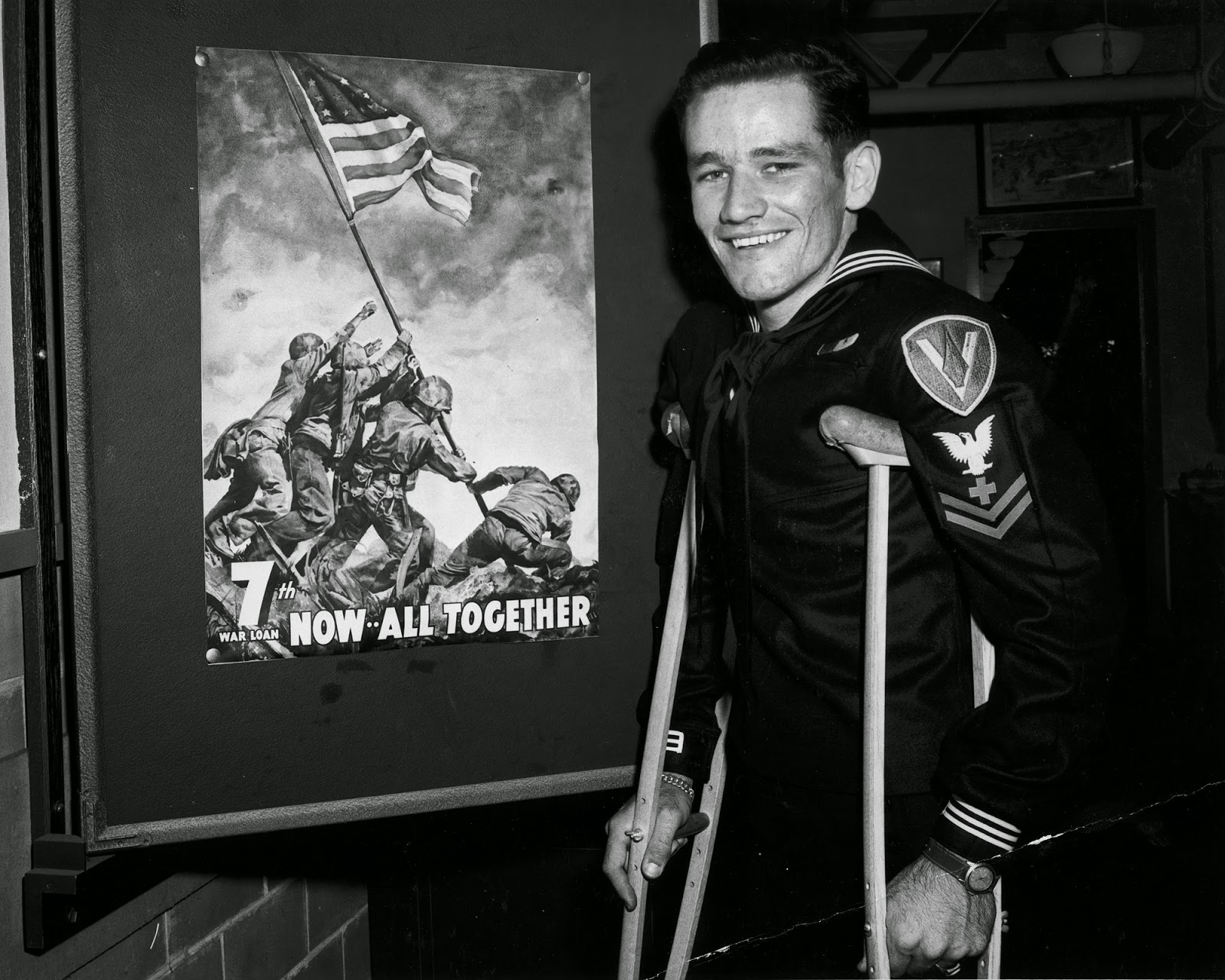
This week's honor goes to "doc" John Bradley. Doc fought in the battle of Iwo Jima, was one of six who helped raise the flag on Mount Suribachi, handled over 200 wounded or dying Marines, lost his best friend in the battle who wasn't just killed, he was captured, tortured, mutilated and then killed.
He was the recipient of the Navy Cross (the Nations second highest award for valor), the purple heart and Presidential Unit Citation.

After the battle:
Doc toured the US with the other survivors who raised the flag on a bond raising tour. They collected over $26 Billion towards the war effort.
Doc gave only 1 interview after the war, married his childhood sweetheart, played himself in John Wayne's "Sands of Iwo Jima" along with the other two survivors. And passed away at the age of 70. He was the oldest and last remaining member of the flag raisers. His son was the person who wrote the book which eventually became "The Flags of our Fathers".

His citation for the Navy Cross:


For extraordinary heroism in action against the enemy at Iwo Jima on Feb. 21, 1945 as a hospital corpsman attached to a Marine Rifle platoon. During a furious assault by his company upon a strongly defended enemy zone at the base of Mt. Suribachi, Bradley observed a Marine infantryman fall wounded in an open area under a pounding barrage by mortars, interlaced with a merciless crossfire from Machine guns.
With complete disregard for his own safety, he ran through the intense fire to the side of the fallen Marine, examined his wounds and ascertained that an immediate administration of plasma was necessary to save the man's life. Unwilling to subject any of his comrades to the danger to which he had so valiantly exposed himself, he signaled would-be assistants to remain where they were. Placing himself in a position to shield the wounded man, he tied a plasma unit to a rifle planted upright in the sand and continued his life saving mission.
The Marine's wounds bandaged and the condition of shock relieved by plasma, Bradley pulled the man thirty yards through intense enemy fire to a position of safety. His indomitable spirit, dauntless initiative, and heroic devotion to duty were an inspiration to those with who he served and were in keeping with the highest tradition of the United States Naval Service.